

By Arthur Kreitenberg, M.D., clinical professor and attending surgeon at UC Irvine; Richard A. Martinello, M.D., professor of medicine (infectious diseases) and pediatrics; Yale Medicine chief medical officer; Castine A. Bernardy, Ph.D., P.E., environmental engineer at CDM Smith; and James P. Malley, Jr, Ph.D., editor-in-chief, UV Solutions and emeritus professor of civil and environmental engineering, UNH
Germicidal Ultraviolet (GUV) light has been used in disinfection applications since the early 1900s with demonstrated success in drinking water, wastewater, HVAC and upper-room systems. In the post COVID-19 era, there has been increasing interest in, and devices aimed at using, GUV to disinfect indoor air and surfaces. End users, including healthcare facilities, infection prevention professionals, pharmaceutical producers, food and beverage producers and processors, and public health regulators, seek real-time visual validation and assurance of the technology’s efficacy in protecting against infectious disease. This article reviews and stratifies various methods of validating the efficacy of surface GUV.
Introduction
Unlike traditional chemical disinfections, which are visible, applied wet, smell toxic and leave a residue, the effects of germicidal ultraviolet (GUV) disinfection are not apparent to human senses. Therefore, end users, including healthcare facilities, infection prevention professionals, pharmaceutical producers, food and beverage providers, and public health regulators, need a rapid and reliable means to verify the efficacy of this technology, whether for air, liquids or surfaces. In response, the GUV community has devised ways to demonstrate efficacy for research, development and technology advancement, and to verify sales and marketing claims.
This paper explores the available validation methods and describes a “hierarchy of validity” of GUV surface disinfection, as well as the pros and cons of each method.
Hierarchy of Validation Methods
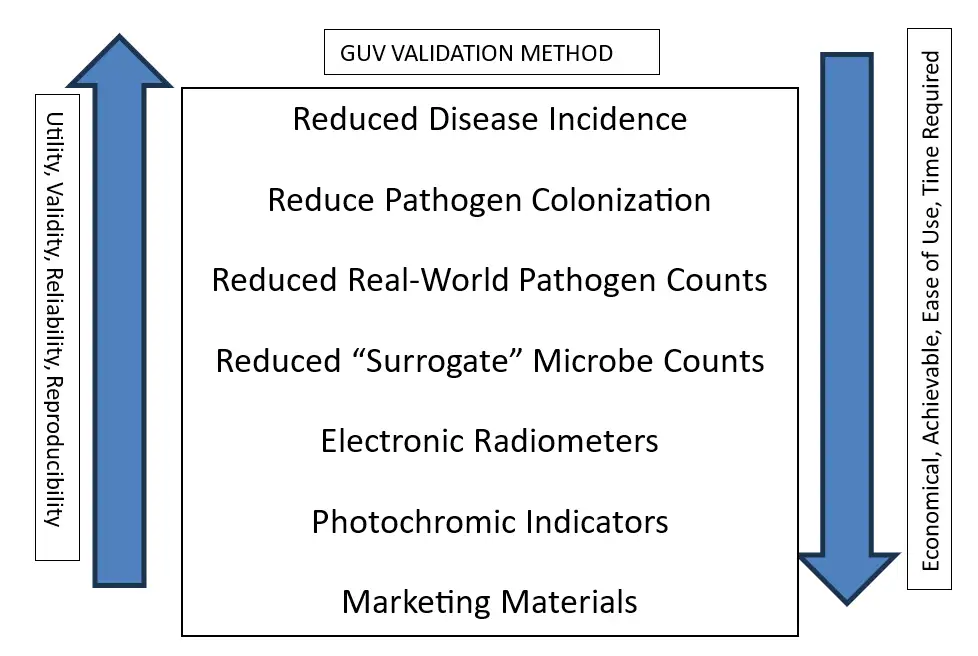
Figure 1 summarizes the status of currently available methods of GUV validation methods.
Reduced Disease Incidence
The goal of any intervention to reduce pathogens in the environment is the reduction of disease. Such studies are resource-intensive to ensure adequate statistical design and implementation, as there are multiple known and unknown confounding factors. There are published studies that purport to show reduction in disease incidence 1, 2 but inherently are flawed using historical controls or multiple simultaneous interventions.
A true double-blind study was conducted at the University of Michigan 3 with 26,000 patient encounters to determine if a pulsed xenon emitter could reduce incidence of Clostridiodes difficile infections in patients. A placebo emitter producing no actual GUV showed infection rates of 2.89%, and the real device emitting GUV light showed infection rates of 3.32% (p=0.23). This statistically insignificant difference between the two groups supports the study conclusion that GUV is ineffective. With infection rates in this low range, it becomes particularly challenging and resource-intensive to demonstrate successful infection control intervention using GUV or many other technologies. For these reasons, infection rates rarely are a conclusive dependent variable to demonstrate disinfection effectiveness due to the vast number of confounding factors.
Reduced Real-World Pathogen(s) Counts
Subscribing to the adage that “an inactive germ doesn’t cause infection,” it is axiomatic that an environment with a lower pathogen bioburden is associated with a lower infectious disease risk. 4, 5, 6 As noted above, this nexus is challenging to prove scientifically due to the low frequency of infections and the multitude of variables impacting one’s risk of infection.
Studies may look at a real-world setting with environmental sampling before and after an intervention such as chemical or GUV exposures. 7 Because the density of pathogens in the environment is low, carefully controlled experimental design and intensive sampling are required to accurately measure significant log10 reductions.
Alternatively, real-world pathogens may be introduced via dense pathogen inoculations into a simulated environment to accurately measure log10 reductions. 8 Such studies, although common in clinical testing and experimental research, require laboratory protocols and precautions, such as a Biosafety Level 2 (BSL-2) facility, as these microbes pose moderate hazards to personnel and the environment. 9, 10 Such precautions contribute to the considerable time needed and resources required for these studies.
This category of validation requires large numbers of cultures, and meaningful studies require weeks to months to complete. They are of limited value if the end users’ goal is rapid decision-making that GUV disinfection has been completed successfully, and it now is safe to re-enter or re-use the environment treated.
Understanding this method is the best achievable validation method, the Healthcare Standards Institute and the American National Standards Institute published a “Performance Standard: Healthcare Germicidal Light Whole Room Surface Disinfection” in 2024, deploying this method for evaluating GUV systems objectively. The time, risks and costs of this method are justified as the performance standard seeks to protect hospitalized patients from multi-drug-resistant pathogens in the healthcare setting.
Reduced Surrogate Microbe Counts
Laboratory studies and full-scale confirmation in the water industry have demonstrated that non-pathogenic “surrogate” microbes with a variety of dose-responses (often bracketing the GUV dose-response of the pathogen) can validate effectively the pathogenic disinfection effectiveness of GUV devices or applications. These surrogate microbes are not known to consistently cause disease in healthy adults and present minimal potential hazard to personnel and the environment. 11 The bacteriophage virus MS2 has been used as a surrogate for estimating UV dose due to its relative resistance to inactivation. 12 UV dose validated using MS2 then is extrapolated to a wide range of pathogen log inactivation that such a dose can produce. Similarly, the bacterium Bacillus spizizenii (subtilis) has been used to produce a validated UV dose, and this also is extrapolated to log inactivation of numerous pathogens, including Clostridiodes difficile.
Some end users may be wary of studies involving a surrogate microbe and would rather know that the actual disease-causing organism has been eliminated. However, the use of the surrogate strategy routinely is accepted as a valid method for confirming the effectiveness of sterilization techniques, such as steam autoclaves, with a typical surrogate of Geobacillus stearothermophilus, identified by the CDC as an acceptable approach in a BSL-1 protocol. With use as a biological indicator for the effective functioning of steam autoclaves, results are available in as little as 20 minutes.
Surrogate use lowers costs and risks and is applicable and accepted in both clinical use and research. Nevertheless, many surrogate methods require time for culture controls, incubation and enumeration and therefore are of little use to the end user seeking immediate validation. There has been some promising recent work on a surrogate spore-forming biological indicator for GUV disinfection, potentially yielding results in as quickly as 10 minutes. 13 It remains to be seen if this is technologically feasible and commercially viable.
Electronic Radiometers
Sometimes referred to as GUV meters, these electronic photon detectors are available commercially in a variety of form factors, wavelength specificity, price, accuracy and precision ranges. Some are free-standing and portable, some are mountable in a room and some are incorporated into the GUV emitter itself. Radiometer calibration with NIST traceability ensures UV measurements tie back to the International System of Units (SI) through an unbroken chain of comparisons. This guarantees accurate, compliant UV readings. The greatest advantage of this validation method is that objective and quantitative data are available immediately, providing instant and satisfying results that disinfection has been accomplished.
However, there often is a real-world disconnect between radiometer data and actual pathogen reductions. Sharma et.al. 14 describe multiple “uncertainties” in the measurement results, including the GUV lamp output, the relative distances and the optical alignment of the source relative to the radiometer position. Additional uncertainties consist of operator inexperience, incorrectly or infrequently calibrated radiometers, and the inability to effectively quantify the GUV light that is reflected, refracted or absorbed (i.e., cold spots, line of sight blocked by particles, etc.) in practical applications where the GUV light is not delivered in a carefully controlled collimated beam device. All these factors can render numerical data suspect or inaccurate. Such uncertainties can be reduced with careful adherence to testing protocols, proper training and appropriate QA/QC.
Even if the output data show sufficient exposure free from uncertainty, additional confounding variables affecting pathogen reduction include the testing medium (air, water or surface), the substrate composition, microbe density, presence of soiling, environmental shadowing, surface reflectance and other factors. Surface disinfection has additional considerations, including surface porosity, texture (which can include surface-roughness measurements) and GUV reflectance. The number of measurements taken and the location of those measurements also will have a significant impact on the results and conclusions. Efforts should be made to identify and routinely measure “worst case” samples or locations often, allowing the inference that if these results show sufficient UV exposure, other samples or locations will as well.
Therefore, despite the apparent objectivity and ease of use, such radiometer readings may falsely and dangerously assure that disinfection has occurred, especially when inexperienced end users interpret the results.
Photochromic Indicators
When exposed to GUV, these one-time disposable chemically treated papers change color – for example, from yellow to pink/red – depending on the number of photons striking the paper, approximating the dose delivered to the surface. They are commercially available and known as “dosimeters.” Although less precise than a radiometer, they are relatively cheap, simple to use and therefore may be used in large quantities around a room to gauge doses across multiple areas simultaneously. They provide instantaneous and visual feedback that disinfection has occurred.
As with electronic radiometers, the color changes also are subject to the confounding variables listed previously that cause the disconnect between such readings and real-world pathogen reduction and may lead to a false and dangerous assurance of disinfection for users without proper training. For example, the instructions for one such indicator state: “Always make sure the yellow color-changing area faces toward the UV-C light source.” 9 For a box-shaped object, a single dosimeter placed on the surface facing the UV-C source cannot confirm disinfection of the other five surfaces, even if its color change indicates the desired level of pathogen reduction.
Nevertheless, due to their immediate feedback and low cost, photochromic indicators may play a valuable role in training and monitoring established GUV systems, validated by other more reliable means.
Marketing Materials
Unvetted, unsupported and misleading marketing materials are mentioned here for completeness and are a major concern in the GUV industry. If not checked, the marketing materials may lead to dangerous implementation of GUV by unsuspecting decision makers mistakenly believing people are protected when the opposite is true. Claims made in marketing materials that lack specific test results demonstrating UV dose delivery for the actual device being used as described in the marketing or the use of models to predict UV dose delivery results that lack significant calibration and validation for the actual applications being claimed in the marketing materials should serve as a warning to the end user that they may not be getting the degree of public health prevention they desire. For example, it is all too common to display a GUV dose response curve developed under ideal, static (petri dish) laboratory conditions, demonstrating that GUV will inactivate a given pathogen. The marketing literature then extrapolates that well-accepted, peer-reviewed, scientific dose-response result to a given device applied at a much larger scale (e.g., an entire room) or applied dynamically (e.g., moving robotic GUV dosing) without providing any validation data for that specific device or in that specific application.
Conclusions
As of this writing, there are several methods for validating GUV effectiveness, each with pros and cons. Manufacturers routinely should recommend methods for end users to confirm the effectiveness of their product, for a specific intended use and application, in their instructions for use. In general, the more dependable the method, the greater the cost, time required and technical expertise needed. Methods that are instantaneous, easy and inexpensive have significant limitations. The method applied by the end user should be based on the end user’s needs, risks to human health of overestimating disinfection effectiveness, pros and cons of the method, and manufacturer instructions detailing the specific validation method required to verify that a specific objective has been achieved by the device.
References available online at uvsolutionsmag.com.
Arthur Kreitenberg, M.D., F.A.C.S., is a surgeon and researcher focused on advancing evidence-based UV-C disinfection standards. He has dedicated his career to improving hospital environmental hygiene and patient safety through rigorous validation protocols. He currently consults on the integration of UV-C technology in healthcare settings. For more information, contact dockreit@gmail.com.
Richard A. Martinello, M.D., is a Professor of Medicine (Infectious Diseases) and Pediatrics; Yale Medicine Chief Medical Officer. For more information, contact richard.martinello@yale.edu.
Castine A. Bernardy, Ph.D., P.E., is an environmental engineer at CDM Smith, working in drinking water treatment. She has a B.S., Master of Engineering and Ph.D. in environmental engineering from the University of New Hampshire. Her Ph.D. focused on UV surface disinfection, highlighting the effects of surface characteristics and environmental conditions on disinfection efficacy. For more information, contact bernardyca@cdmsmith.com.
James P. Malley, Jr, Ph.D., is emeritus professor of civil and environmental engineering at the University of New Hampshire (UNH), where he continues his 45+ year disinfection research career. Jim was the founding president of the IUVA and currently serves as the Editor-in-Chief of UV Solutions – Innovations for Industry, Public Health and the Environment. For more information, contact jim.malley@unh.edu.