

By Liz Stevens, writer, UV Solutions
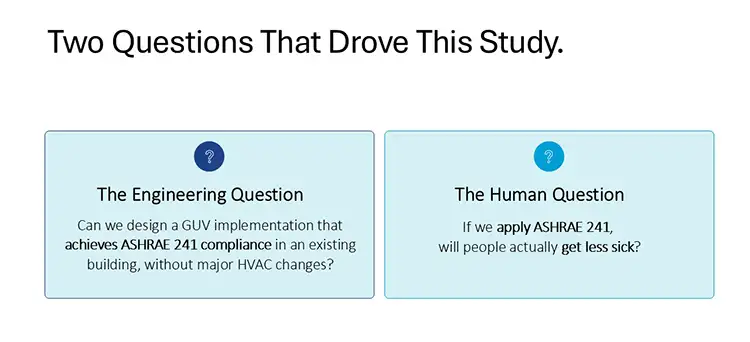
Light Progress, Coppell, Texas, and Arezzo, Italy, a developer of UV-C disinfection technologies, has completed an ASHRAE (American Society of Heating, Refrigerating and Air-Conditioning Engineers) 241-compliant germicidal UV-C study project conducted at Cardigan Ridge, a Minneapolis memory care and senior living community. According to Light Progress Group CEO Giulia Santi, the project was designed to evaluate the role of germicidal UV technology in helping facilities like Cardigan Ridge meet ASHRAE 241 requirements.
“The standard ASHRAE 241, Control of Infectious Aerosols, sets a target for equivalent clean airflow under infection-risk management mode (IRMM) and gives building operators flexibility in how to meet it,” she said. “We tested one of those pathways, germicidal UV, in the common areas of a senior care facility.” The project was an opportunity to implement the guidelines of ASHRAE 241 for validation in a real-world environment. “The hypothesis was that by strategically adding and integrating UV-C technology,” said Santi, “we could achieve improved indoor air quality and facilitate better health outcomes, compared with a strategy of increasing outdoor air intake or increasing the HVAC filter grade to achieve similar goals.” The project’s partners included Light Progress, Cardigan Ridge, NALMCO (International Association of Lighting Management Companies), Network Thermostat, Noble Electric (now a part of R&K Electric) and Purdue University.
Installation of equipment, including UV-C air disinfection technologies, was completed in September 2024, at which time data collection of CO₂ levels, thermostat readings and indoor air quality (IAQ) parameters commenced. The study’s air quality-related health outcome tracking included monitoring infections and disease spread among Cardigan Ridge’s residents and staff. The study concluded in September 2025 with positive results derived from integrating GUV UV-C into existing buildings and HVAC systems, and with positive indications for the technology’s impact on air quality and the health of residents and staff at Cardigan Ridge.
Installation and Study Design
“The existing HVAC system at Cardigan Ridge was unchanged,” said Santi. “We focused on enhancing indoor air quality through increased equivalent air changes per hour achieved through UV-C integration, in compliance with ASHRAE 241 and with no major HVAC system modifications.” The project used upper-room germicidal UV-C (URGUV) systems, HVAC-integrated germicidal UV-C technology and in-room air purification devices. The study evaluated UV-C technology’s impact on air quality, health and energy cost in a residential care environment. For more installation details, see the UV Solutions online article, “Light Progress and Partners Install UV-C GUV Technologies in Senior Living Facility,” at https://uvsolutionsmag.com/articles/2025/light-progress-and-partners-install-uv-c-guv-technologies-in-senior-living-facility/.
Purdue University’s Role
A project partner – Lyles School of Civil and Construction Engineering at Purdue University, West Lafayette, Indiana – performed analyses of the role of GUV technology in maintaining air quality. Purdue researchers conducted modeling and simulations of the UV-C systems, and mapped UV-C fluence rate distribution for evaluation of GUV efficacy. They also designed and simulated ASHRAE 241-compliant strategies to gauge the effects of UV-C technology on air changes per hour.
Purdue’s Professor Ernest R. Blatchley III described the modeling and simulations for the project. “We developed a new method to quantify the contributions of GUV systems to control airborne pathogens,” Blatchley said. “This was done using a model to account for the fluence rate field in the rooms and pathogen-specific sensitivity to UV254 radiation. These results expand on the approach suggested by ASHRAE 241 in that they provide a quantitative assessment of GUV effects on various pathogens.” Purdue’s mapping of UV-C fluence rate distribution was crucial to the project. “The fluence rate field modeling played a key role in allowing us to develop estimates of the contributions of GUV systems to airborne pathogen control,” said Blatchley. “It also allowed a quantitative assessment of human exposure relative to existing guidance.”
Findings and Health Outcomes
“The study encompassed the entire Cardigan Ridge facility, focusing on common areas that were ideal for URGUV implementation,” said Santi. Health data from Cardigan Ridge residents and staff was compared to historical records and to data from nearby control facilities, allowing researchers to identify and quantify the UV-C systems’ specific benefits in enhancing health outcomes. The health outcomes measured included flu cases, respiratory infections and other illnesses among residents and staff.
“The core hypothesis held that we had achieved ASHRAE 241 ‘equivalent clean air’ targets for SARS‑CoV‑2 (the standard’s reference pathogen) and most respiratory pathogens,” said Santi. A key element of the study was a comparison between an ASHRAE 241-compliant building and non-compliant buildings that essentially were identical – same HVAC systems, size, layout and operational characteristics. “That design yields two key findings,” Santi said. “First, existing facilities can reach ASHRAE 241 compliance through retrofit, particularly by integrating GUV/UV-C technologies, without major HVAC replacement. GUV enabled the facility to reach the target equivalent air changes per hour (eACH) in most occupied spaces, delivering the equivalent clean air needed to meet ASHRAE 241 in a practical, cost-effective way.” The installed NetX thermostats, from Network Thermostat, provided continuous logging of CO₂ and HVAC runtime, serving as a verification and audit tool. Runtime data confirmed that the mechanical baseline stayed constant across treatment and control facilities, and CO₂ logging verified that outdoor-air delivery (~25%) was unchanged throughout. “In other words,” said Santi, “the data confirmed that the measured air-quality and health differences are attributable to the GUV layer, not to a quietly altered ventilation regime – exactly the kind of defensible record operators need for ASHRAE 241 conformance.”
The second finding is that ASHRAE 241 compliance is not just a theoretical engineering target – it translates into measurable health benefits, with occupants in the compliant building experiencing significantly lower rates of illness. “Across the tracking period (October 2024 through March 2025), Cardigan Ridge recorded seven documented cases, approximately 6% of the study population, compared with control facilities that ranged from 14% to 41%,” said Santi. “The comparison to sister facilities under the same operator, region and HVAC profile is a strong signal. This is a positive real-world signal, but it is not definitive proof. Larger controlled clinical trials are needed before causal claims can be made.”
The study results are important to makers of UV-C disinfection technology. “Our findings reinforce a design-and-commission-first discipline,” said Santi. “Model the fluence field before installation, commission per ASHRAE GPC 37P and NALMCO protocols, use only Certified GUV Management Professionals® and verify occupant safety against the ACGIH (American Conference of Governmental Industrial Hygienists) TLV (threshold limit values) (0.2 µW/cm²) – all of which we did, with readings well below the limit.” The study results also push the industry toward pathogen-aware specification. “Since efficacy scales with UV susceptibility,” Santi said, “we recommend setting expectations by target pathogen and pairing GUV with appropriate ventilation/filtration where susceptibility is low. The takeaway for guidelines is that quantified, auditable performance – not fixture count – should define a compliant installation.”
Implications for ASHRAE 241 Compliance
Insights from the study can inform the curriculum for air-quality construction best practices at academic centers such as the Lyles School of Civil and Construction Engineering at Purdue. “The study offers a worked, real-world bridge between GUV reactor theory and field implementation, translating a modeled 254 nm fluence rate field into equivalent clean airflow and ASHRAE 241 conformance,” Santi explained. “A central contribution from Professor Blatchley and MS student Mohd Bilal Shadab was their deep expertise in UV-C technology, including the critical role of pathogen susceptibility and k-values (ultraviolet inactivation rate constants), which emerged as one of the key findings of Purdue’s GUV assessment.”
According to Santi, Purdue’s added value for applying ASHRAE 241 requirements while implementing GUV systems was in translating the practical constraints into a rigorous assessment methodology. “This methodology can help the industry better understand how GUV technologies should be designed, applied and evaluated in relation to ASHRAE 241 objectives.” For advancing academic studies on the topic, a valuable lesson from this project is the need to frame new research priorities. “The well-mixed-air assumption breaks down against a non-uniform fluence field,” she said. “Results are scenario-specific (MERV‑9 [minimum efficiency reporting value] earns zero ECA [equivalent clean air] credit here), and conformance is pathogen-dependent; these are nuances that future practitioners must model, commission and verify rather than assume.”
To Professor Blatchley, the study results suggest that GUV systems that are properly designed, installed and operated can be effective for reducing the risk of transmission of airborne, communicable diseases. “But to clarify,” he said, “this study involved a relatively small population of subjects. The results of this work were promising and certainly support the idea that GUV systems can play important roles in reducing the risk of airborne disease transmission. However, we need more studies like this, with larger subject populations, to truly validate the behavior of these systems.” In that regard, he suggested that larger studies are needed to inform a risk-based approach to the design of GUV systems – an approach that will promote application of the systems and a rational design protocol that is broadly applicable.
“There is a need for proactive measures to be taken to address airborne disease transmission risk,” said Blatchley. “GUV systems appear to offer the potential to reduce these risks in a manner that is safe and cost-effective. Engineers, scientists and policymakers need to work together to implement these systems.” Santi concurred. “A goal of this work,” she said, “is to help bridge the gap between ASHRAE 241 requirements and the practical implementation of GUV systems that are needed to achieve compliance in real-world buildings.”
Giulia Santi will present “Field-Proven Impact of Upper-Room GUV: A Study in Minnesota Assisted Living Facilities” at the IUVA Americas Conference in Halifax, October 2026. For more information, visit www.lightprogress.com or email Prof. Blatchley at blatch@purdue.edu.