

By Troy Cowan, IUVA Healthcare/UV Working Group
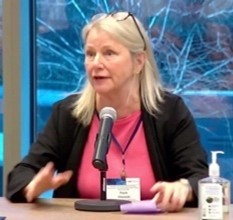
It’s the last day of the NIST/IUVA Workshop, and it’s Paula Olszewski’s (Ph.D., Contributing Scholar, Johns Hopkins Center for Health Security, Johns Hopkins Bloomberg School of Public Health) turn to share during the closing panel. She summed up the conference beautifully: “Good morning. We need GUV.” Well said… and there’s more. Olszweski then went on to share her excitement about the proposed action plan, which included between six and nine action items for consideration, mixed with her concerns and a strong sense of urgency. She concluded with “So, how do we build on the excitement and energy here to actually get something done?”
Good question, Paula. Here’s what’s in progress:
- Documenting the proceedings has been difficult, due to changing administration program priorities. However, the videos have been transcribed and summarized using AI tools, resulting in a draft ‘synopsis’ (~98 pages) that now is under review.
- The final version will be incorporated into an overall NIST official workshop report, to be published and made available for open distribution, posted on NIST’s internet channel. Videos of the three keynote addresses, four plenary talks, six panels and multiple all-hands discussion sessions also will be posted.
Breakout Sessions
Essential components of the workshop were the breakout sessions, where each discussion was focused on a particular area of concern – air disinfection, surface disinfection, GUV data and terminology, and microbiology testing. Each session was tasked to develop its own list of issues and problems and to define the proposed action items and plans necessary to correct them. A timeframe of two years was set as the target completion date.
The individual breakout sessions were heavily attended, and their input still is under review, both by the breakout session groups themselves and by an action plan coordination group, overseeing the entire workshop’s output for consistency, quality and relevance.
The Surface breakout session, led by Sam Guzman, global director of Sales for American Ultraviolet Company, initially focused on issues around 222 nm technology and its unique challenges, but then broadened the discussion to all wavelengths and generic issues involving disinfection measurement and detection. High on the list for this session was the identification of a graded approach to performance measurement (i.e., good/better/best), with variations applied depending on identified risk factors. Also addressed was the development of a uniform protocol for determining K values within three years, standardizing the ‘challenge pathogens’ used in testing, and improving guidance and educational materials to implement and complement the above. Their activities resulted in 11 proposed action items which now are under review.

The Air breakout session, led by Dustin Poppendieck, Ph.D., environmental engineer with the National Institute of Standards and Technology,focused on what would be necessary to perform a round-robin test of a standardized disinfection measurement protocol, to include standardizing terminology, establishing a committee to develop the testing protocol, developing the protocol, testing it for repeatability and reproducibility, and publishing it for implementation. These actions and more were captured in 11 action items, also under review.
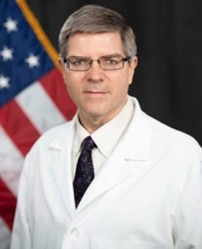
The Data and Terminology breakout session, led by Curtis Donskey, Infectious Diseases physician and hospital epidemiologist at the Louis Stokes Cleveland VA Medical Center and a Professor of Medicine at Case Western Reserve University, confirmed the need for round-robin testing, even proposing an existing test method to use as a starting point for developing the standard. The next objective was to task a group of industry professionals with developing the initial list of key terms and collecting definitions already in use for these terms, which would form the starting basis for a standardized dictionary. That initial draft list has been developed and is being circulated within the breakout group for additional terms and revisions. The intent then is to link this effort into the microbiology testing deliverable, culminating in a unified product incorporating the data dictionary into the standardized testing protocol, with a target implementation date of September 2026.
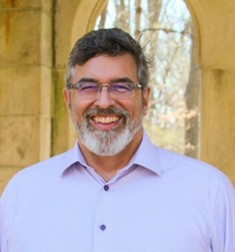
The Microbiology Testing breakout group was run as an all-hands panel discussion, due to the high level of interest by all concerned. Leading the discussion was Matt Hardwick, Ph.D., consultant and CEO, ResInnova Clinical Diagnostics,engaging a panel of six lab SMEs in developing the plan for a round-robin testing protocol and all of the accompanying relevant terminology. The group set interim planning dates (now under review by the Workshop Coordinating Committee).

The common need identified by all of these groups was one of communication and education. How can we get our GUV story out to the world in a way that is readily understood, appreciated and trusted? Phyllis Posy, Ph.D., principal, Posy Global, suggested on Day One of the event that there was a need for trust, asking “How do we make UV a dipstick technology so that people know? Know it happened, and they can trust and feel that it happened?”
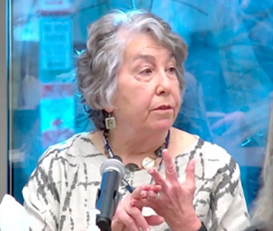
Kate McPhaul, RN, MPH, Ph.D., associate research professor for the University of Maryland School of Public Health, brought home the need for trust very clearly in her closing session comments: “I just want to say that our target audience is not monolithic. We have smart people, we have dumb people, we have science-literate people, we have crazy people…you have different messages for all of them [and their] trusted messengers. Most people…want to check it with somebody. And those are the trusted messengers.”
The question then becomes: How do we reach the trusted messengers with a trustworthy message? Improved communication is the obvious answer, but what, when and how?
Expanding on What?
- In the three months since the workshop, the “What?” has expanded into an outreach program, which could include:
- a possible series of webinars intended for groups of trusted messengers (a lesson from the 2020 workshop), presented one per quarter (?) as a planned series;
- a repository of past webinars, briefings, white papers and other resources, cataloged and readily accessible over the web;
- gathering a collection of positive GUV success stories (housed in UoMD’s GUV Health Hub) to be shared publicly;
- recruiting knowledgeable speakers/presenters for a GUV Speakers’ Bureau, providing resources to present on various GUV topics in person or virtually to local audiences anywhere in the nation (e.g. local Health Department, public schools, science classes, etc.);
- developing a science-based curriculum on GUV technology that can be incorporated into classrooms from Kindergarten through high school and into Bachelors’ and post-graduate programs;
- establishing Science Fair awards for innovative GUV research/development, which could include aspects of physics, biology, medicine and safety as well as social sciences dealing with topics of concern (gaining GUV acceptance, overcoming negative preconceptions, etc.);
- collaborating with the other action item efforts (especially data and terminology);
- and the list goes on…
Expanding on When?
Let’s do it. Like Curtis Donskey shared in his closing, “I think setting deadlines…is going to help us move forward. This is not that difficult. It’s difficult if we sit around talking about it forever.”
Expanding on How?
Kate McPhaul is pulling this together, teaming UoMD resources with workshop attendees, IUVA and its MOU partners in an all-hands effort. She’s thinking of a spontaneous ‘cohort’ of collaborators, each focusing on a different facet of the program, all coordinated through web and AI technology for real-time access and use by any interested party.
Finding the Who?
Who are these trusted messengers we’re trying to reach? Several groups of professionals have been mentioned, including healthcare providers, hospital administrators, public health officials, facilities managers, school administrators, county officials, regulators, legislators, etc. But they all have the same problem. Simply put, they don’t have a clue what we’re talking about.
Why? They don’t know the basics. They were never taught about GUV – what it is, what it can do and where it makes sense. How did they miss out? It was never taught in the schools. The only time it comes up now is when there’s an emergency or a pandemic, and then all the information the trusted messengers receive is patchwork, hit-or-miss and trickle-down. That’s not very effective.
I would suggest that teachers are the most trusted messengers we have, from Kindergarten through high school and on into post-secondary education. What if we focused on giving them the curriculum needed to teach the basics of Infection Control (including GUV) and getting that incorporated into classrooms across the country? Sound crazy? Maybe so. But, do you remember Robert Fulghum’s best-seller All I Really Need To Know I Learned in Kindergarten?Same premise. Give people the basics when they’re most apt to internalize the knowledge and build on it. We need to break out of our box and break into a largely untapped audience – our teachers, our most trusted messengers. Why? Because it’s all about saving lives.
A Farewell
With that closing thought, I want to thank you, the readers of this column over the last 2-3 years, for your support and consideration of the ideas presented. As leadership of the Healthcare/GUV Working Group transitions to Lew Radonovich, this column also will undergo a transition. It has been an honor and a pleasure to contribute to UV Solutions. Many thanks to Jeff, Dianna and all of the UV Solutions staff who’ve helped me produce these articles. I look forward to all the next issues.