

By Tatiana Koutchma, Ph.D., UV4Good
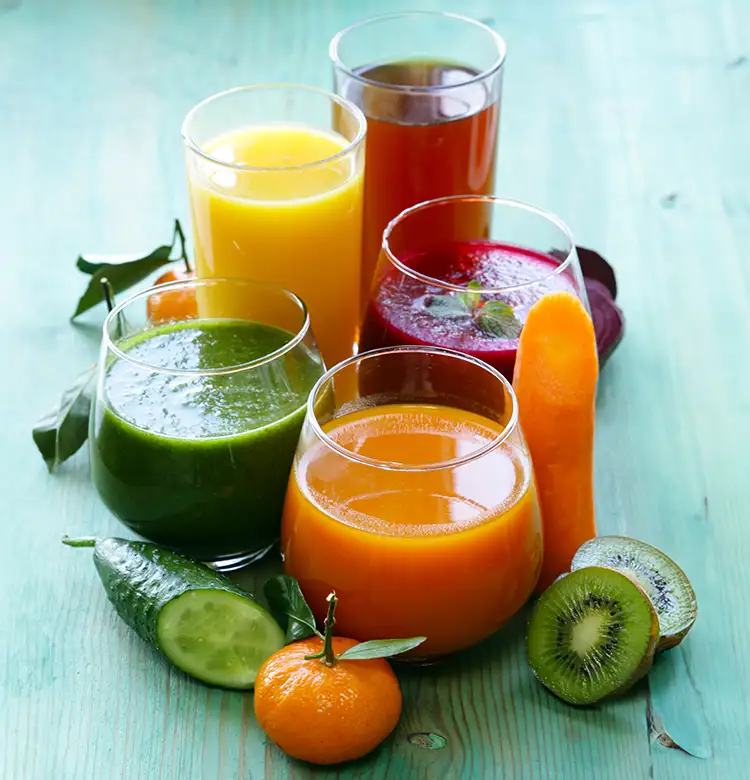
Ultraviolet-C (UV-C) technology long has been recognized for its effectiveness in microbial inactivation. Over the past two decades, UV-C has gained increasing attention as a nonthermal, nonchemical preservation technology for liquid foods and ingredients, especially in applications where maintaining fresh-like quality and extended shelf-life are critical. While its potential is well established, the transition from laboratory studies to reliable commercial implementation remains a significant challenge.
For UV equipment manufacturers and technical experts, this gap presents both an opportunity and a responsibility: To move beyond proof-of-concept and toward validated, reproducible and application-specific solutions. Achieving this requires not only advances in systems design but also a deeper understanding of how UV-C interacts with complex liquid food systems and meets regulatory standards.
The Challenge of Real-World Application
Unlike water or other optically clear fluids, many liquid foods – particularly fresh fruit and vegetable juices – are characterized by low UV transmittance (UVT), high turbidity and complex composition. These properties significantly limit light penetration and complicate dose delivery.
As a result, the effectiveness of UV-C processing is not determined solely by lamp intensity or reactor configuration, but by a combination of factors, including the following:
- optical properties of the product (UV absorbance, scattering) and its components;
- hydrodynamics and flow conditions within the reactor;
- presence of particles and suspended solids; and
- target microorganisms and required log reductions.
This complexity often leads to a disconnect between bench-scale studies and industrial-scale performance, where expected microbial reductions are not consistently achieved.
Moving Beyond “Dose” as a Single Parameter
In many discussions, UV-C processing is simplified to the concept of “dose.” However, for opaque or low-UVT liquids, this simplification can be misleading. The actual delivered dose is highly dependent on reactor design, mixing conditions and product characteristics.
For equipment manufacturers, this highlights the importance of:
- designing systems that ensure uniform exposure,
- validating performance under worst-case conditions and
- integrating real-time monitoring signals that correlate with delivered dose.
In this context, biodosimetry has emerged as a critical tool in water treatment. By linking microbial inactivation to system performance, biodosimetry enables a more reliable translation of laboratory data into commercial operation.
Bridging the Gap: A Practical Framework
To support this transition from feasibility to validated operation, a structured, practice-oriented approach is essential. This is the motivation behind a series of publications.
A Practical Guide for Ultraviolet (UV-C) Treatment of Liquid Foods 1
The series is designed to provide technical guidance that connects scientific principles with industrial implementation, addressing the key questions faced by both equipment developers and end users. It outlines a decision-oriented framework for evaluating when UV-C is a suitable technology and how to approach process development in a systematic way for four categories of products with the highest benefits of UV-C processing.
Volume 1: Focus on Fresh Juices 2
The first volume in the series focuses on one of the most challenging applications: Fresh fruit and vegetable juices. This 67-page guide addresses the full process development pathway, including the following:
- feasibility assessment based on product properties,
- selection of microbial targets and performance criteria,
- UV-C dose determination and validation strategies,
- application of biodosimetry for low-UVT systems,
- identification of critical operating parameters and
- integration into industrial processing and HACCP systems.
Importantly, the guide emphasizes that UV-Cprocessing is not universally applicable. Instead, it provides practical criteria to determine:
- when UV-C is a viable option,
- when alternative technologies may be more appropriate,
- how to avoid common pitfalls in scale-up and validation and
- how to address regulatory challenges.
Implications for Equipment Manufacturers
For UV equipment manufacturers, the increasing interest in UV-C processing of liquid foods represents a growing market – but also a technically demanding one. Success in this space will depend on the ability to provide systems that are not only innovative, but also:
- validated for specific product categories,
- supported by robust performance data,
- aligned with regulatory expectations and
- adaptable to varying product properties.
Manufacturers that can demonstrate a clear understanding of process validation and product-specific limitations will be better positioned to support their customers and differentiate their technologies.
A Shift Toward Integrated Solutions
Another important trend is the shift from standalone equipment toward integrated process solutions. UV-C treatment does not operate in isolation – it must be considered within the broader context of:
- upstream processing (filtration, clarification),
- downstream handling, packaging and storage and
- shelf-life and quality requirements.
This systems-level perspective is essential for achieving consistent and reliable outcomes.
Looking Ahead
While fresh juices represent a critical starting point, the broader landscape of liquid foods offers additional opportunities and challenges. Future volumes in the series will address the following:
- beverages, including plant-based drinks and beer;
- dairy liquids and milk variants; and
- liquid ingredients such as sugars and processing media.
Each category presents unique considerations regarding physico-chemical and optical properties; microbial targets, including pathogenic and spoilage organisms; enzymatic reduction and process integration.
Conclusion
UV-C processing of liquid foods has moved beyond the stage of theoretical potential. The focus now is on practical implementation, validation and optimization. For UV equipment manufacturers and experts, this represents a pivotal moment. By combining advances in technology with a deeper understanding of process fundamentals, it is possible to unlock the full potential of UV-C as a nonthermal preservation method.
The goal of this series is to support that transition – providing a clear, structured and application-focused frameworkthat bridges the gap between research and commercial reality.
References
- A Practical Guide for Ultraviolet (UV-C) Treatment of Liquid Foods,https://tnkoutchma.gumroad.com/l/qlgaov
- Fresh Fruit and Vegetable Juices,https://tnkoutchma.gumroad.com/l/fnlkjv