

IUVA Young Professional Spotlights
The International Ultraviolet Association (IUVA) is proud to celebrate the outstanding contributions of young professionals who are shaping the future of the UV industry. In each issue of UV Solutions, the IUVA Young Professionals committee highlights individuals whose work exemplifies innovation, dedication and impact on the industry. In this edition, the committee is pleased to recognize Daniel Ma and Tara Randall for their exceptional achievements and commitment to advancing UV technologies.
Daniel Ma
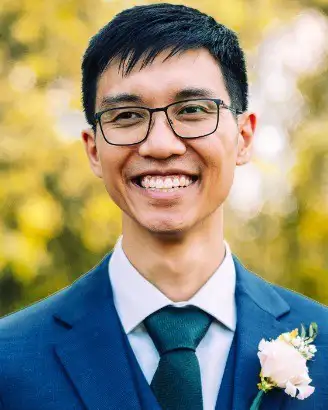
Daniel Ma is an environmental engineer at CDM Smith based in Columbus, Ohio. Ma earned his Ph.D. and M.S. in environmental engineering from Ohio State University. He holds a B.S. in civil and environmental engineering from Messiah College, where he became interested in using water treatment engineering to solve global water challenges. His graduate research focused on UV LED water disinfection, novel UV-based strategies for remote communities, bacteria regrowth and repair kinetics, quantitative microbial risk assessment, rural community perceptions of drinking water and SARS-CoV-2 wastewater surveillance. At CDM Smith, Ma currently is involved in a wide range of projects encompassing water reuse master planning, disinfection modeling and design, emerging contaminants in drinking water and pretreatment regulations. He also previously supported the efforts of the IUVA Sustainable Development Goals Task Force.
Introduce yourself.
I was introduced to UV work at Messiah College through The Collaboratory, where I participated in various service learning projects as a part of the engineering curriculum. Helping underserved communities in Honduras, Nicaragua and Pakistan really got me into water treatment, where I took an interest in UV based on conversations with many communities where the residents did not like the smell or taste of chlorine as a disinfectant. As an undergrad, I was connected to Natalie Hull at OSU, where I developed a hydropower UV system, which was a real-world challenge and essential to meet the needs of people and communities.
Now I do disinfection modeling to help municipal clients in UV wastewater disinfection, including peracetic acid, chlorine and UV disinfection. I also have been involved in executing a market analysis for reuse to determine whether potable reuse is feasible in new areas. This includes working closely with the US EPA.
Describe a major project you’ve been working on.
I’ve been working on the central Ohio water reuse feasibility study, where my role is to conduct a market analysis of potential reuse customers and to identify which areas of the region would benefit most from reuse. In addition, I am investigating treatment design, layout and water quality characterization. This includes potable and non-potable reuse for systems such as data centers, which have had a huge AI growth in central Ohio.
What do you see as the biggest challenge in the current UV industry?
One of the challenges is that the UV industry wants to move forward, but the overall water/wastewater industry takes longer to obtain approval. I’d like to see the development of a regulatory framework or regulations for UV LEDs moving forward.
The biggest need is for more collaboration between utilities and the UV industry. Listening to some of their needs and not working in silos would provide opportunities for operators/end users to inform design. This would best serve the needs of the end-user customers.
What key pieces of advice can you give to YPs who are early in their career?
One piece of advice would be to find your purpose for what you do beyond your work life. Be careful how you define your metrics for success. Don’t settle for something you don’t want. Find good mentors and people to support you and, outside of work, have a strong community you can depend on. Your family, friends and other communities will help you go far.
Tara Randall
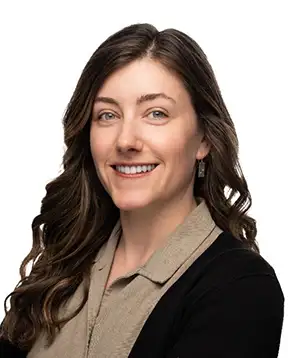
Tara Randall is a water and wastewater engineer for Carollo Engineers, based in California, and is driven by a passion for microbiology and improving access to water and sanitation services for underserved communities. In her current role, she spends most of her time doing treatment process design for drinking water and wastewater projects in North America. Randall received her B.S. from the University of California Davis and completed her M.S. in Environmental Engineering from the University of Colorado Boulder, where she investigated UV LED disinfection technology for wastewater reuse in water-scarce settings.
Introduce yourself.
I’ve been working as a consultant for about five years and have been fortunate to work across the full lifecycle of UV systems. This includes piloting UV LED and traditional UV technology, spending time on-site helping utilities troubleshoot UV-related performance challenges and designing open-channel and closed-vessel UV systems for drinking water, wastewater and reuse applications. I really enjoy detailed design and trying to optimize operator experiences surrounding UV. A fun fact is that I have worked on water projects on four continents and in five countries.
Describe a major project you’ve been working on.
I’ve been working on the preliminary design of a Direct Potable Reuse (DPR) facility for Moulton Niguel Water District located in southern Orange County, California, where I serve as the project engineer. The project aims to provide a new potable water supply for the region. One of the more interesting aspects is that all of the alternative treatment trains actually include two UV systems, UVAOP and UV disinfection. That may seem silly, but for DPR in California, pathogen reduction must be achieved through independent treatment barriers with limits on how much credit any single process can receive… so two separate UV systems are required to meet and/or exceed the 20/14/15 regulations. Additionally, regulators may be reducing the pathogen log reduction credit for UV, so this design approach provides redundancy if the rules do shift.
What is your favorite thing about the industry? What are you most excited about for the future of the UV industry?
What I enjoy most about this industry is the balance between technical innovation and human connection. The UV community is small enough that relationships really matter, and people genuinely are willing to share lessons learned. I still run into friends from graduate school at conferences and can reach out to former advisers or mentors for advice years later.
Looking ahead, I am super excited to see how the UV LED technology integrates into mainstream water/wastewater facility design. I have been involved with UV LEDs for the majority of my career and find the options for innovation, like tailoring wavelength to the application, incredibly exciting.
What key pieces of advice can you give to YPs who are early in their career?
Notice how you feel after collaborating with others… energized and curious, or intimidated and depleted? Those feelings often tell you more than titles or resumes. Just because someone has experience or authority does not mean they are the right mentor for you. Invest in mentorships that make you feel supported, capable and excited to learn.
IUVA YP Seminar Series Update
The YP Committee will be continuing its virtual IUVA YP Seminar Series throughout 2026. The next two seminars will be presented by Drew Hess (DeNora) and Danmei Chen (University of Toronto). Dates within 2026 (Q1 and Q2) will be confirmed at a later time. If interested in attending or presenting work at one of these seminar series, email iuvayp@iuva.org or xliu@garverusa.com.
The IUVA YP Column is prepared and reviewed by Anthony Pimentel, technical communications director of the IUVA YP committee. To become involved with the IUVA YP committee, email iuvayp@iuva.org.