

By Lew Radonovich, M.D., IUVA, and Rick Martinello, M.D., Yale School of Medicine
“Discovery consists of seeing what everybody has seen and thinking what nobody has thought.” Albert Szent-Györgyi (1893-1986), Nobel laurate
The science of germicidal UV (GUV) has benefited from a rich history of laboratory and clinical research, primarily involving wavelengths at or near 254 nm, helping to pave its pathway into healthcare delivery. 1 Despite substantial scientific and practice advances, its role has yet to be fully defined or widely accepted 2-3 especially regarding air disinfection. 4 The emergence of 222 nm GUV, often called “Far UV,” 5 has led to renewed interest in this technology 6 as a potential tool to prevent or reduce the transmission of healthcare-associated infections, 7 including for airborne transmissible infections. 8 Although some may view scientific progress with GUV as slow, it is common for infection control technologies to gain acceptance gradually before finding an optimal role in the healthcare sector. Let’s briefly view progress through the lens of hand hygiene.
Ignaz Semmelweis (1818-1865) was a Hungarian physician-scientist who pioneered the utilization of hand hygiene during surgeries and medical procedures. He figured out that the incidence of “childbed fever,” maternal infections that occur after childbirth (now called postpartum infections), was markedly reduced when obstetrical workers disinfected their hands. To reduce the risk of maternal mortality after childbirth, he suggested that healthcare workers routinely cleanse their hands. Despite carefully documenting and publishing a book about his findings, his ideas were generally rejected by the scientific community because they conflicted with established norms at that time. 9 Additionally, his proposal was mocked by some in the medical community because it insinuated that doctors should practice better hygiene. 10 Other luminaries, including Louis Pasteur and Joseph Linder 11 built on the work done by Semmelweis 12 before it gained wider acceptance.
Today, hand hygiene is widely acknowledged as one of the most effective ways to decrease healthcare-associated infections 13 and Semmelweis is recognized as one of the pioneers of evidence-based medicine. 14 However, Semmelweis was beleaguered and disturbed by the negative reactions expressed by some about his ideas. He died disgruntled, well before his ideas were recognized as visionary. 15 Maybe, his feelings more than a century ago resembled the feelings of some contemporary healthcare and public health scientists who worked so hard during the COVID-19 pandemic and now view their contributions as ignored, discounted or derided. 16
For many healthcare workers, the COVID-19 pandemic was a traumatic event, reminiscent of battlefield medicine. Healthcare workers have often used emotionally charged words to describe their day-to-day experiences as “a war zone,” 17 “relentless” and “lacking sufficient recovery time,” 18 that caused moral distress, isolation and injury in an environment with scarcity of equipment and supplies, including ventilators and PPE, where patients died alone and the staff became the family at the bedside. 19 Healthcare workers described deep fatigue, emotional numbness and severe burnout. 19 For those who worked in the US, the pandemic came at a time when there already were workforce shortages, rising demand from an aging and sicker population, financial strain on hospitals and health systems, emergency department overcrowding, increasing administrative and documentation burdens, fragmentation and discontinuity of patient care, public health system underfunding, 20 a loss of trust in government 21 and public health systems, 22 and wide dissemination of misinformation. 23 For patients who received care during the COVID-19 pandemic, common refrains were feelings of isolation, loneliness, fear, uncertainty, repeated delays and disruptions in services, and a pervasive loss of control. 24 Family members of those who received care during the COVID-19 pandemic experienced separation from their ill relatives during highly vulnerable moments, inducing disempowerment, excessive worry, moral distress and guilt about a perceived inability to advocate fully for their beloved. 25 For all, at a minimum, it was extremely disruptive to daily life, economically jarring, emotionally upsetting and socially destabilizing. 26
Despite the many challenges posed by the pandemic, the healthcare delivery sector rose to the occasion heroically. ICU bed capacity rose by a third during the first few months, reflecting the stresses on the healthcare system and workers who cared for these patients. Routine medical care wards were converted to negative-pressure wards, critical care areas and post-operative recovery areas. 27 Staff were cross-trained across disciplines and assumed unfamiliar roles, while routinely exposing themselves to a highly contagious and potentially lethal pathogen. They managed to maintain professionalism and somehow found the strength to keep returning to work each day, despite prolonged shifts replete with tremendous uncertainties. 28 Some chose to stay at their workplaces overnight to avoid potentially exposing their children or other family members to SARS-CoV-2, especially during the early period when the epidemiology was still being discerned, and the mode(s) of transmission were still uncertain. 29 Healthcare workers staffed mass vaccination sites formed in close collaboration with local and regional public health departments, pharmacies and private sector laboratories. Over 100 million people were vaccinated in the United States between December 14, 2020, and April 21, 2021, catalyzed by Operation Warp Speed. 30 Overall, the response in the US was an incredible public health achievement that would have caused our scientific forebearers, like Szent-Györgyi and Semmelweis, to stand in awe.
Despite these successes, the pandemic brought other stressors to healthcare and public health. Both the frequency of healthcare-associated infections and the multidrug-resistant organisms (MDROs) increased substantially. 31 In particular, a novel, drug-resistant yeast named Candida auris, responsible for serious healthcare-associated outbreaks, has spread throughout the US and globally, with no signs of slowing, this decade. 32
Highly consequential epidemics and pandemics, possibly involving MDROs, are on the horizon; we just don’t know the precise timeline. We don’t have the luxury of sitting on our heels waiting for someone else to do something. We need to continue to take the lead, be ambitious, deliberately engage in calculated risks and act decisively while trusting our best intuition that is grounded in years of experience and knowledge. It is also right for us to engage in honest introspection, bold self-reflection and a willingness to examine closely what went right and what went wrong during the pandemic. We may feel beleaguered and even a bit confused. The way out of this bewilderment is to take a step forward, followed by another step and one more, guided by rigorous science and sound medical evidence, until the steps forge pathways and the pathways turn into successes. A component of this “after action” assessment should include a careful look at the immense knowledge gained about extant and nascent tools that may be used to reduce person-to-person transmission of infections during the next pandemic, including ultraviolet energy.
In 1877, Arthur Downes and Thomas Blunt demonstrated that sunlight inactivates and kills bacteria. Subsequently, William Firth Wells and Mildred Weeks Wells showed that ultraviolet light in germicidal wavelengths had the potential to prevent transmission of tuberculosis and measles. 33 Since then, it has been studied and utilized in healthcare delivery for environmental surface disinfection, ventilation augmentation to reduce exposures to airborne pathogens, medical device and equipment decontamination, water disinfection, and operative and procedural setting disinfection. It has been entertained as a disinfection tool that is “pathogen agnostic” that may help mitigate a growing crisis of antimicrobial resistance and “superbugs.” 34
While much has been learned, much more knowledge must be gained 35 for us to understand the scope, patient care settings and applications of GUV to optimally improve human health and reduce the cost and societal burden of healthcare-associated infections and spread of MDROs (see box: Key UV Challenges).
At this moment, with the COVID-19 pandemic in our rearview, we have a unique opportunity to reset and prepare for future public health events that are highly consequential. In his groundbreaking and insightful book, Good to Great, Jim Collins does not advocate for unbridled, flashy risks that put companies or organizations at risk; instead, he calls for disciplined, evidence-based decision-making based on deeply understood principles and sound economics that grow momentum gradually. 44 He found that successful organizations engage in rigorous debate, face “brutal facts” and make thoughtful, deliberate commitments. He posits that reacting emotionally to pressure and making dramatic pivots can presage failure. 44
In our view, it is time for the clinical scientists, the medical community, public health experts and industry to return to foundational principles and harness hard work, interdisciplinary collaboration, creative thinking, and strong enthusiasm for innovation to figure out the optimal use of GUV in healthcare delivery. We have more than 100 years of science serving as a sound footing and many examples from history that argue for not giving up. Acknowledging and accepting the frustrations, setbacks and trauma that grew out of the COVID-19 pandemic, let’s focus on the future. The 2025-26 influenza season already has arrived. The next pandemic lies ahead. There is no time to waste.
Join the IUVA Healthcare Working Group video conferences that occur monthly. Email Perri Katzman at perri@radtech.org to be added to the email list.
Key UV Challenges for Industry
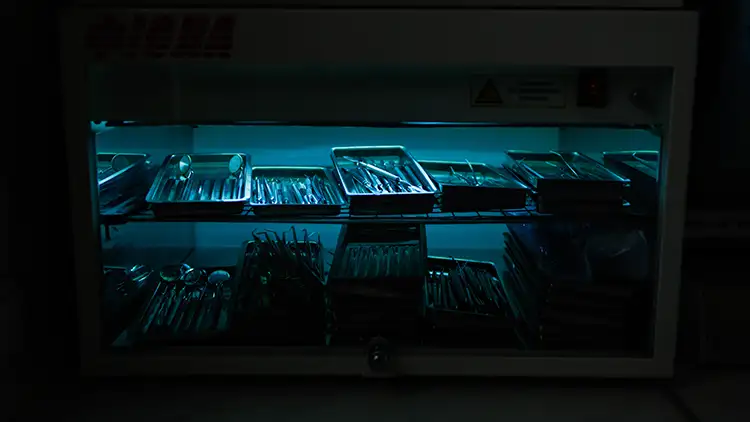
- While studies show benefit from surface disinfection of high-touch surfaces after patient discharge, typically called “terminal cleaning,” to be fully efficacious, this approach requires line-of-sight exposure and is combined with chemical disinfection. What is the optimal way to combine these technologies to reduce transmission? How can GUV be used to decrease the use of chemical disinfectants, and can this approach be both clinically effective and cost-effective?
- Although some research has suggested substantial clinical benefit from air disinfection with GUV, much of the evidence has come from studies with major methodologic limitations, leaving many clinicians, ventilation engineers and building operators/owners unconvinced it should be widely implemented. 36-37 How should studies be designed that will definitively demonstrate whether and how to disinfect the air to reduce indoor transmission between building occupants, and how should it be combined with ventilation?
- Despite evidence that GUV efficaciously disinfects reusable medical devices and equipment – such as stethoscopes, keyboards and N95 respirators – it has been shown to cause material degradation over time and is not suitable for use on some polymers. 38 What is the optimal way to utilize GUV to disinfect reusable medical equipment?
- Although some evidence suggests GUV can be used to prevent or treat surgical site infections, pressure ulcers or other skin wounds, the evidence is mixed and subject to study design limitations. 39 What is the best way to utilize GUV to prevent or improve the healing of skin lesions? And what about battlefield injuries?
- Low-pressure mercury lamps that produce wavelengths in germicidal ranges can also cause tissue damage with overexposure. 40 Shorter and safer wavelengths, such as those produced by excimer lamps, have been shown to be efficacious against human pathogens, although rigorously designed and sufficiently powered human transmission studies are lacking. 41-42 When will we find ways to collaborate across disciplines to conduct idealized, or at least robust and sufficiently powered, clinical trials? 43
- Although our predecessors embraced wavelengths at or near 254 nm produced by low-pressure mercury lamps, the global marketplace forces suggest other wavelengths and technologies may be favored. And what about emerging technologies, such as LEDs, lasers and pulsed xenon?
References
- Maugeri, A., Casini, B., Esposito, E., Bracaloni, S., Scarpaci, M., Patanè, F., Milazzo, G., Agodi, A., & Barchitta, M. (2025). Impact of ultraviolet light disinfection on reducing hospital-associated infections: A systematic review in healthcare environments. Journal of Hospital Infection. Advance online publication. https://doi.org/10.1016/j.jhin.2025.01.012
- Centers for Disease Control and Prevention. (2024, September 22). Webinar: Germicidal ultraviolet use in healthcare settings [Video]. YouTube. https://www.youtube.com/watch?v=SlHrymnRHaE
- Beggs, C. B., & Avital, E. J. (2021). Air disinfection for air-borne infection control with a focus on COVID-19: Why germicidal UV is essential. Photochemistry and Photobiology, 97(3), 493–509. https://doi.org/10.1111/php.13421
- Mugerwa, L., Weng, L. M., Sampson, C. V., Vokey, J. M., & Barkley, R. L. (2025). Impact of ultraviolet light disinfection on reducing hospital-associated infections: A systematic review in healthcare environments. Journal of Hospital Infection. Advance online publication. https://www.sciencedirect.com/science/article/pii/S0195670125000283
AND
Kowalski, W. J. (2020). Ultraviolet germicidal irradiation handbook: Applications of UVGI for air and surface disinfection. Springer. https://pmc.ncbi.nlm.nih.gov/articles/PMC7115255/
AND
Scott, A. J., Joshi, L. T., & Ginn, O. (2022). Hospital surface disinfection using ultraviolet germicidal irradiation technology: A review. Health Technology Letters, 9(3), 79–90. https://doi.org/10.1049/htl2.12032
AND
Centers for Disease Control and Prevention. (2024). About germicidal ultraviolet (GUV). National Institute for Occupational Safety and Health. https://www.cdc.gov/niosh/ventilation/germicidal-ultraviolet/index.html - Buonanno, M., Welch, D., Shuryak, I., & Brenner, D. J. (2020). Far-UVC light (222 nm) efficiently and safely inactivates air-borne human coronaviruses. Scientific Reports, 10,10285. https://doi.org/10.1038/s41598-020-67211-2
- Blueprint Biosecurity. (2025). Blueprint for far-UVC (Preprint v1.0). Blueprint Biosecurity. https://blueprintbiosecurity.org/works/blueprint-for-far-uvc/
- Donskey, C. J., Kundrapu, S., Sunkesula, V., & Deshpande, A. (2025). Evaluation of a far ultraviolet-C device for decontamination of portable equipment in clinical areas. American Journal of Infection Control. Advance online publication. https://doi.org/10.1016/j.ajic.2024.12.011
AND
International Ultraviolet Association. (2023). Far UVC radiation for disinfection of air and surfaces. International Ultraviolet Association Inc. https://iuva.org/Far-UVC-Radiation-for-Disinfection-of-Air-and-Surfaces - Locke, P. A., & Eadie, E. (2024). Far-UVC is a public health tool we need now. Infection Control Today. https://www.infectioncontroltoday.com/view/far-uvc-is-public-health-tool-we-need-now
- Semmelweis, I. (1861). Die Ätiologie, der Begriff und die Prophylaxis des Kindbettfiebers [The etiology, concept, and prophylaxis of childbed fever]. Pest, Hungary: C. A. Hartleben.
- Nakagawa, M., Morimoto, Y., Kayumi, T., Yamaguchi, H., & Uchiyama, A. (2024). Twelve-week exposure to far ultraviolet-C during clinical examination does not cause ocular surface damage. Journal of Ophthalmology, 2024, Article 11568873. https://pmc.ncbi.nlm.nih.gov/articles/PMC11568873/
- Berche, P. (2012). Louis Pasteur, from crystals of life to vaccination. Clinical Microbiology and Infection, 18(Suppl 5), 1–6. https://doi.org/10.1111/j.1469-0691.2012.03945.
- Paul, S., Salunkhe, S., Mane, S. V., & Kumbhar, S. (2024). Pioneering hand hygiene: Ignaz Semmelweis and the fight against puerperal fever. Cureus, 16(10), e71689. https://doi.org/10.7759/cureus.71689
- Centers for Disease Control and Prevention. (2002). Guideline for hand hygiene in healthcare settings: Recommendations of the Healthcare Infection Control Practices Advisory Committee and the HICPAC/SHEA/APIC/IDSA Hand Hygiene Task Force. Morbidity and Mortality Weekly Report, 51(RR-16), 1–44. https://www.cdc.gov/mmwr/preview/mmwrhtml/rr5116a1.htm
- Gillies, J. (2012). The roots of evidence-based medicine. British Columbia Medical Journal, 54(9), 444–445. https://bcmj.org/premise/roots-evidence-based-medicine
- Paul, S., Salunkhe, S., Mane, S. V., & Kumbhar, S. (2024). Pioneering hand hygiene: Ignaz Semmelweis and the fight against puerperal fever. Cureus, 16(10), e71689. https://doi.org/10.7759/cureus.71689
- Huang, P. (2025, August 6). Public health experts dismayed by RFK Jr.’s defunding of mRNA vaccine research. NPR. https://www.npr.org/sections/shots-health-news/2025/08/06/nx-s1-5493544/rfk-defunding-mrna-vaccine-research
AND
Lewis, M. (2021). The premonition: A pandemic story. W.W. Norton & Company.
AND
Morris, F. (2023, August 28). Distrust undermined the U.S. pandemic response. Now it continues to erode health care. NPR. https://www.npr.org/2023/08/28/1196441559/distrust-undermined-the-u-s-pandemic-response-now-it-continues-to-erode-healthca - The Guardian. (2022, January 19). ‘It’s a war zone’: Healthcare workers show signs of stress similar to combat veterans. The Guardian. https://www.theguardian.com/world/2022/jan/19/healthcare-workers-post-traumatic-stress-disorder-pandemic-covid
- Persson, B., Dall’Ora, C., Ingre, M., Kecklund, G., & Salo, P. (2024). Under pressure: Nursing staff’s perspectives on working hours and recovery during the COVID-19 pandemic: A qualitative study. International Journal of Nursing Studies Advances, 6, 100243. https://doi.org/10.1016/j.ijnsa.2024.100243
- Vist, G. E., Brurberg, K. G., Brønnick, K. K., & Marik, P. E. (2020). The mental health impact of the COVID-19 pandemic on healthcare workers, and interventions to help them: A rapid systematic review. Psychiatry Research, 293, 113441. https://doi.org/10.1016/j.psychres.2020.113441
AND
Galanis, P., Papamichail, D., Vasilopoulou, C., Zvavaki, G., Katsiroumpa, A., Moisoglou, I., Siskou, O., Kaitelidou, D., & Bellali, T. (2022). Health care workers’ experiences during the COVID-19 pandemic: A scoping review. Human Resources for Health, 20, 27. https://doi.org/10.1186/s12960-022-00727-2
AND
Sun, P., Wang, M., Song, T., Wu, Y., Luo, J., Chen, L., Yan, L., & Yan, L. (2021). The psychological impact of COVID-19 pandemic on health care workers: A systematic review and meta-analysis. Frontiers in Psychology, 12, 626547. https://doi.org/10.3389/fpsyg.2021.626547
AND
Aymerich, C., Pedruzo, B., Pérez, J. L., Laborda, M., Herrero, J., Blanco, J., Mancebo, G., Andrés, L., Gálvez-Llora, J., Fernández, M., & García-Campayo, J. (2022). COVID-19 pandemic effects on health worker’s mental health: Systematic review and meta-analysis. European Psychiatry, 65(1), e10. https://doi.org/10.1192/j.eurpsy.2022.3
AND
Ollove, M. (2021, August 5). The pandemic has devastated the mental health of public health workers. Community Commons. https://www.communitycommons.org/entities/d27c4e32-a5ee-4c8e-888d-65f45d27b81a - Lupkin, S. (2025, December 4). US health care is broken — and it’s getting worse. NPR. https://www.npr.org/2025/12/04/nx-s1-5629211/health-care-broken-costs-united-health-investors
AND
Yglesias, R. (2025, January 26). ‘It’s a death sentence’: US health insurance system is failing, say doctors. The Guardian. https://www.theguardian.com/us-news/2025/jan/26/us-health-insurance-system-doctors
AND
American College of Surgeons. (2025). US healthcare system is in crisis. Bulletin of the American College of Surgeons, 110(2). https://www.facs.org/for-medical-professionals/news-publications/news-and-articles/bulletin/2025/february-2025-volume-110-issue-2/us-healthcare-system-is-in-crisis/ - Pew Research Center. (2025, December 4). Public trust in government: 1958–2025. Pew Research Center. https://www.pewresearch.org/politics/2025/12/04/public-trust-in-government-1958-2025/
- Think Global Health. (2023). The crisis of trust in public health. Think Global Health. https://www.thinkglobalhealth.org/article/crisis-trust-public-health
AND
Perlis, R. H., Maher, N., Posada, A., Green, J., Santillana, M., Druckman, J., Baum, M., Simonson, M., Dunsmoor, J. E., & Lazer, D. (2024). Trust in physicians and hospitals during the COVID-19 pandemic in a 50-state survey of US adults. JAMA Network Open, 7(7), e23271693. https://doi.org/10.1001/jamanetworkopen.2023.271693
AND
Bayram, A. B., & Shields, T. (2021). Who trusts the WHO? Heuristics and Americans’ trust in the World Health Organization during the COVID-19 pandemic. Social Science Quarterly, 102(5), 2312–2330. https://doi.org/10.1111/ssqu.12977 - Tangcharoensathien, V., Calleja, N., Nguyen, T., Purnat, T., D’Agostino, M., Garcia-Saiso, S., Landry, M., Rashidian, A., Hamilton, C., AbdAllah, A., Ghiga, I., Hill, A., Hougendobler, D., van Andel, K., Nunn, M., Brooks, I., Sacco, P. L., De Domenico, M., Mai, P., … Briand, S. (2022). Infodemics and health misinformation: A systematic review of reviews. Bulletin of the World Health Organization, 100(9), 544–561. https://doi.org/10.2471/BLT.22.288532
AND
Rodrigues, F., Newell, R., Babu, G. R., Gupta, L., & colleagues. (2024). The social media infodemic of health-related misinformation and technical solutions. Health Policy and Technology, 13(2), 100846. https://doi.org/10.1016/j.hlpt.2024.100846 - Firouzkouhi, M., Shahraki-vahed, A., Abdollahimohammad, A., Mazlom, S., & Abdollahimohammad, A. (2021). Experience of patients hospitalized with COVID-19: A qualitative study of a pandemic disease in Iran. Health Expectations, 24(5), 1718–1727. https://doi.org/10.1111/hex.13280
AND
Elliott, M. N., Beckett, M. K., Cohea, C. W., Lehrman, W. G., Cleary, P. D., Giordano, L. A., Russ, C., & Goldstein, E. H. (2023). Changes in patient experiences of hospital care during the COVID-19 pandemic. JAMA Health Forum, 4(8), e232766. https://doi.org/10.1001/jamahealthforum.2023.2766
AND
Sun, N., Wei, L., Shi, S., Jiao, D., Song, R., Ma, L., Wang, H., Wang, C., Wang, Z., & You, Y. (2021). Qualitative study of the psychological experience of COVID-19 patients during hospitalization. Journal of Affective Disorders, 278, 15–22. https://doi.org/10.1016/j.jad.2020.08.040 - Giannetta, N., Iacoboni, C., Mambella, P., Di Carlo, A., Di Muzio, M., Dionisi, S., Torelli, E., & Valente, M. (2021). The lived experiences of family members of COVID-19 patients admitted to intensive care unit: A phenomenological study. Heart & Lung, 50(6), 923–930. https://doi.org/10.1016/j.hrtlng.2021.07.007
AND
Hochendoner, S. J., Curtis, J. R., Nelson, J. E., Engelberg, R. A., Shine, D., Heyland, D. K., Creutzfeldt, C. J., Engelberg, J. K., Anderson, W. G., & Back, A. L. (2022). Voices from the pandemic: A qualitative study of family experiences and suggestions regarding the care of critically ill patients. Annals of the American Thoracic Society, 19(4), 610–620. https://doi.org/10.1513/AnnalsATS.202105-629OC - Pew Research Center. (2025, February 12). 5 years later: America looks back at the impact of COVID-19. Pew Research Center. https://www.pewresearch.org/politics/2025/02/12/5-years-later-america-looks-back-at-the-impact-of-covid-19/
AND
Santora, M., & Brown, A. (2024, March 14). How did the Covid-19 pandemic affect you, your family and your community? The New York Times. https://www.nytimes.com/2024/03/14/learning/how-did-the-covid-19-pandemic-affect-you-your-family-and-your-community.html
AND
Mooallem, J. (2025, March 11). How the pandemic upended our lives. The New York Times. https://www.nytimes.com/2025/03/11/realestate/pandemic-covid-home-life.html
AND
Fox News. (2025, April 1). COVID 5 years later: Impact on education. Fox News. https://www.foxnews.com/family/covid-5-years-later-impact-education
AND
Abbott, B. (2022, July 31). How the Covid-19 pandemic changed Americans’ health for the worse. The Wall Street Journal. https://www.wsj.com/articles/how-the-covid-19-pandemic-changed-americans-health-for-the-worse-11659260165 - Fogerty, R. L., Crowley, K., Larkin, S., & Dardik, A. (2022). Inpatient capacity management during COVID-19 pandemic: The Yale New Haven Hospital capacity expansion experience. Hospital Topics, 100(2), 69–76. https://doi.org/10.1080/00185868.2021.1926383
- Persson, B., Dall’Ora, C., Ingre, M., Kecklund, G., & Salo, P. (2024). Under pressure: Nursing staff’s perspectives on working hours and recovery during the COVID-19 pandemic: A qualitative study. International Journal of Nursing Studies Advances, 6, 100243. https://doi.org/10.1016/j.ijnsa.2024.100243
AND
Doleman, G., De Leo, A., Bloxsome, D., & O’Connor, M. (2023). The impact of pandemics on healthcare providers’ workloads: A scoping review. Journal of Advanced Nursing, 79(12), 4434–4454. https://doi.org/10.1111/jan.15690 - Ceballos, D. M., Vasquez, D. A., Corburn, J., Perea, F. C., Ritz, B. R., Sanchez, S. H., Torres, E., & Mantripragada, K. (2024). Healthcare workers’ experiences protecting themselves and their families during the COVID-19 pandemic in 2020–2021. Annals of Work Exposures and Health, 68(9), 919–934. https://doi.org/10.1093/annweh/wxae064
AND
Byrne, J. P., Ashcroft, D. M., Koskela, T., Lyons, G., Sammut, D., McGowan, J., Denholm, R., Ronda-Perez, E., & Pelly, T. (2021). Supporting primary care professionals to stay in work during the COVID-19 pandemic: Views on personal risk and access to testing during the first wave of pandemic in Europe. Frontiers in Medicine, 8, 726319. https://doi.org/10.3389/fmed.2021.726319
AND
Schaffer, G. E., Kilanowski, L., Scherer, A. M., & Hatcher, J. (2022). A qualitative investigation of the impact of COVID-19 on United States’ frontline health care workers and the perceived impact on their family members. International Journal of Environmental Research and Public Health, 19(17), 10483. https://doi.org/10.3390/ijerph191710483 - U.S. Government Accountability Office. (2021). Operation Warp Speed: Accelerated COVID-19 vaccine development status and efforts to address manufacturing challenges (GAO-21-319). U.S. Government Accountability Office. https://www.gao.gov/products/gao-21-319
AND
Piper, K. (2023, January 17). Operation Warp Speed was a huge success. So why is the US turning away from it? Vox. https://www.vox.com/future-perfect/2023/1/18/23560407/operation-warp-speed-pandemics-vaccines-covid-white-house-biden-trump - Wolford H, McCarthy NL, Baggs J, et al. Antimicrobial-Resistant Infections in Hospitalized Patients. JAMA Netw Open. 2025;8(3):e2462059. doi:10.1001/jamanetworkopen.2024.62059
AND
Baker MA, Sands KE, Huang SS, Kleinman K, Septimus EJ, Varma N, Blanchard J, Poland RE, Coady MH, Yokoe DS, Fraker S, Froman A, Moody J, Goldin L, Isaacs A, Kleja K, Korwek KM, Stelling J, Clark A, Platt R, Perlin JB; CDC Prevention Epicenters Program. The Impact of Coronavirus Disease 2019 (COVID-19) on Healthcare-Associated Infections. Clin Infect Dis. 2022 May 30;74(10):1748-1754. doi: 10.1093/cid/ciab688. PMID: 34370014; PMCID: PMC8385925.
AND
Sands KE, Blanchard EJ, Fraker S, Korwek K, Cuffe M. Health Care–Associated Infections Among Hospitalized Patients With COVID-19, March 2020-March 2022. JAMA Netw Open. 2023;6(4):e238059. doi:10.1001/jamanetworkopen.2023.8059 - Lionakis, M. S., & Chowdhary, A. (2024). Candida auris infections. New England Journal of Medicine, 391(20), 1924–1935. https://doi.org/10.1056/NEJMra2402635Carl Zimmer’s “Air-Borne: The Hidden History Of The Life We Breathe”.
- Centers for Disease Control. (1990). Guidelines for preventing the transmission of tuberculosis in healthcare settings, with special focus on HIV-related issues. Morbidity and Mortality Weekly Report, 39(RR-17), 1–29.
AND
Jin, Y. O., Shin, Y., Choi, J., Kim, S., & Park, J. (2025). Impact of ultraviolet light disinfection on reducing hospital-associated infections: A systematic review in healthcare environments. Journal of Hospital Infection, 146, 1–10. https://doi.org/10.1016/j.jhin.2024.12.005
AND
Nardell, E. A. (2021). Air disinfection for air-borne infection control with a focus on COVID-19: Why germicidal UV is essential. Photochemistry and Photobiology, 97(3), 493–497. https://doi.org/10.1111/php.13421
AND
Scott, R., Joshi, L. T., & McGinn, C. (2022). Hospital surface disinfection using ultraviolet germicidal irradiation technology: A review. Healthcare Technology Letters, 9(3), 25–33. https://doi.org/10.1049/htl2.12032 Applications of ultraviolet germicidal irradiation disinfection in health care facilities: Effective adjunct, but not stand-alone technology – PMC - Centers for Disease Control and Prevention. (2024, October 16). About germicidal ultraviolet (GUV). National Institute for Occupational Safety and Health, U.S. Department of Health and Human Services. https://www.cdc.gov/niosh/ventilation/germicidal-ultraviolet/index.html
AND
Nardell, E. A. (2021). Air disinfection for air-borne infection control with a focus on COVID-19: Why germicidal UV is essential. Photochemistry and Photobiology, 97(3), 493–497. https://doi.org/10.1111/php.13421
AND
ASHRAE. (2023, July 7). ASHRAE publishes Standard 241, Control of Infectious Aerosols. American Society of Heating, Refrigerating and Air-Conditioning Engineers. - ASHRAE. (2023). ASHRAE Standard 241: Control of infectious aerosols. American Society of Heating, Refrigerating and Air-Conditioning Engineers. https://www.ashrae.org/technical-resources/bookstore/ashrae-standard-241-control-of-infectious-aerosols
AND
Piper, K. (2024, January 16). Ultraviolet light can kill almost all the viruses in a room. Why isn’t it everywhere? Vox. https://www.vox.com/the-highlight/23972651/ultraviolet-disinfection-germicide-far-uv
AND
Görlitz, M. (2024, March 10). Why are we not using upper-room ultraviolet germicidal irradiation (UVGI) more? Effective Altruism Forum. https://forum.effectivealtruism.org/posts/i5Xf2SNYNgM9NBDMR/why-are-we-not-using-upper-room-ultraviolet-germicidal - Suh, D., Sherlock, S. H., Dukes, K. C., & Perencevich, E. N. (2025). Impact of UV-C on material degradation: A scoping literature review. Antimicrobial Stewardship & Healthcare Epidemiology, 5, eXXX. https://doi.org/10.1017/ash.2025.
- Lo, W., Ousey, K., Stephenson, J., & Nelson, E. A. (2014). Phototherapy for treating pressure ulcers. Cochrane Database of Systematic Reviews, 2014(7), CD009224. https://doi.org/10.1002/14651858.CD009224.pub2
AND
Moghissi, K. (2010). Can surgical site infection (SSI) be treated by photodynamic therapy (PDT)? Photodiagnosis and Photodynamic Therapy, 7(1), 1–2. https://doi.org/10.1016/j.pdpdt.2010.01.005
AND
Hamblin, M. R., & Dai, T. (2010). Can surgical site infections be treated by photodynamic therapy? Photodiagnosis and Photodynamic Therapy, 7(2), 134–136. https://doi.org/10.1016/j.pdpdt.2010.04.004 - Di Bernardo, G., Alessio, N., Cipollaro, M., Valeria, C., Soldovieri, M. V., Sisalli, M. J., Barone, M., Ferrari, C., Galderisi, U., & Peluso, G. (2024). Germicidal lamps using UV-C radiation may pose health safety issues: A biomolecular analysis of their effects on apoptosis and senescence. Aging, 16(9), 7511–7522. https://doi.org/10.18632/aging.205787
- Buonanno, M., Ponnaiya, B., Welch, D., Stanislauskas, M., Randers-Pehrson, G., Smilenov, L., Owens, D. M., & Brenner, D. J. (2017). Germicidal efficacy and mammalian skin safety of 222-nm UV light. Radiation Research, 187(4), 483–491. https://doi.org/10.1667/RR0010CC.1
- Williamson, R. D., Carel, D., Montavon, J., & Blueprint Biosecurity. (2025). Blueprint for far-UVC (Version 1.0). Blueprint Biosecurity. https://blueprintbiosecurity.org/works/far-uvc/
- Di Bernardo, G., Alessio, N., Cipollaro, M., Valeria, C., Soldovieri, M. V., Sisalli, M. J., Barone, M., Ferrari, C., Galderisi, U., & Peluso, G. (2024). Germicidal lamps using UV-C radiation may pose health safety issues: A biomolecular analysis of their effects on apoptosis and senescence. Aging, 16(9), 7511–7522. https://doi.org/10.18632/aging.205787
- Collins, J. C. (2001). Good to great: Why some companies make the leap… and others don’t. HarperCollins.